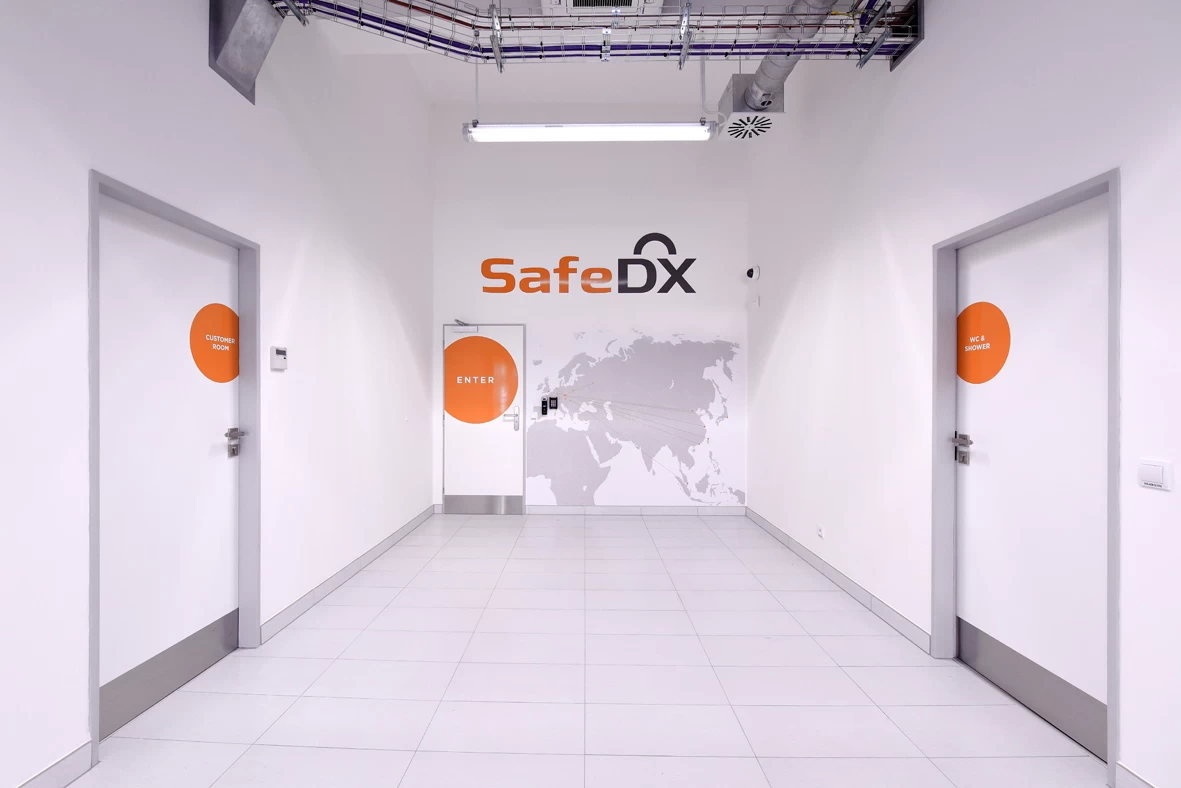
Choosing a data centre is a decision that affects the operational reliability of a company’s IT systems
When a company is considering where to locate its IT infrastructure, the first question is often simply: how much does a rack cost and how much power will be available? For critical business systems, however, this is too narrow a view. A rack is a physical space. Operational reliability is only achieved through a combination of the environment, processes, monitoring, people, power supply, cooling, connectivity and accountability.
As a company grows, the role of its entire infrastructure changes. Servers no longer simply host email or shared folders. They now run Enterprise Resource Planning (ERP) systems, production databases, internal applications, integration services, customer portals, analytics and backup systems. A system failure is therefore not merely a technical inconvenience. It is an operational risk.
That is why, when choosing a data centre, it pays to ask the right questions. Not just how much space you’ll get, but what operating model lies behind that space.
Why choosing a data centre is so important
The data centre is the basis for reliable operation of corporate IT. If it does not meet the real requirements of the company, problems can occur with outages, limited connectivity, insufficient security or complex infrastructure expansion.
When making a choice, it is therefore not enough to simply compare price or basic technical specifications. It is important to view the data centre as a whole: from physical security and power supply through to connectivity, the Service Level Agreement (SLA) and operational infrastructure.
1. Data centre location
The location of the data centre affects the physical availability of technology, network latency and business continuity. For many companies, it is important that the infrastructure is located in the Czech Republic or in an easily accessible location with quality facilities.
When assessing a site, it makes sense to focus in particular on accessibility for maintenance work, the stability and safety of the site, risks associated with the surrounding environment, and the suitability of the location from both an operational and a regulatory perspective. A well-chosen site simplifies infrastructure management and reduces operational risks.
2. Connectivity and network availability
A high-quality data centre must be built on a reliable network layer: that is, an internet connection and infrastructure that ensures stable and fast access to corporate services. Without sufficient capacity and appropriately designed redundancy – that is, backup routes that can take over traffic in the event of a failure – even a well-designed infrastructure cannot function effectively in the long term.
It is worth looking into the number of independent connectivity providers, the available connection capacity, the redundancy of the network infrastructure, monitoring and oversight of operations, and the options for further expanding connectivity. The operating model is also important: whether the company will use shared connectivity, dedicated capacity, or a direct connection to operators present in the data centre. It is connectivity that often determines the actual quality of rack housing. On paper, almost everything can look good. In practice, however, things tend to be less convincing.
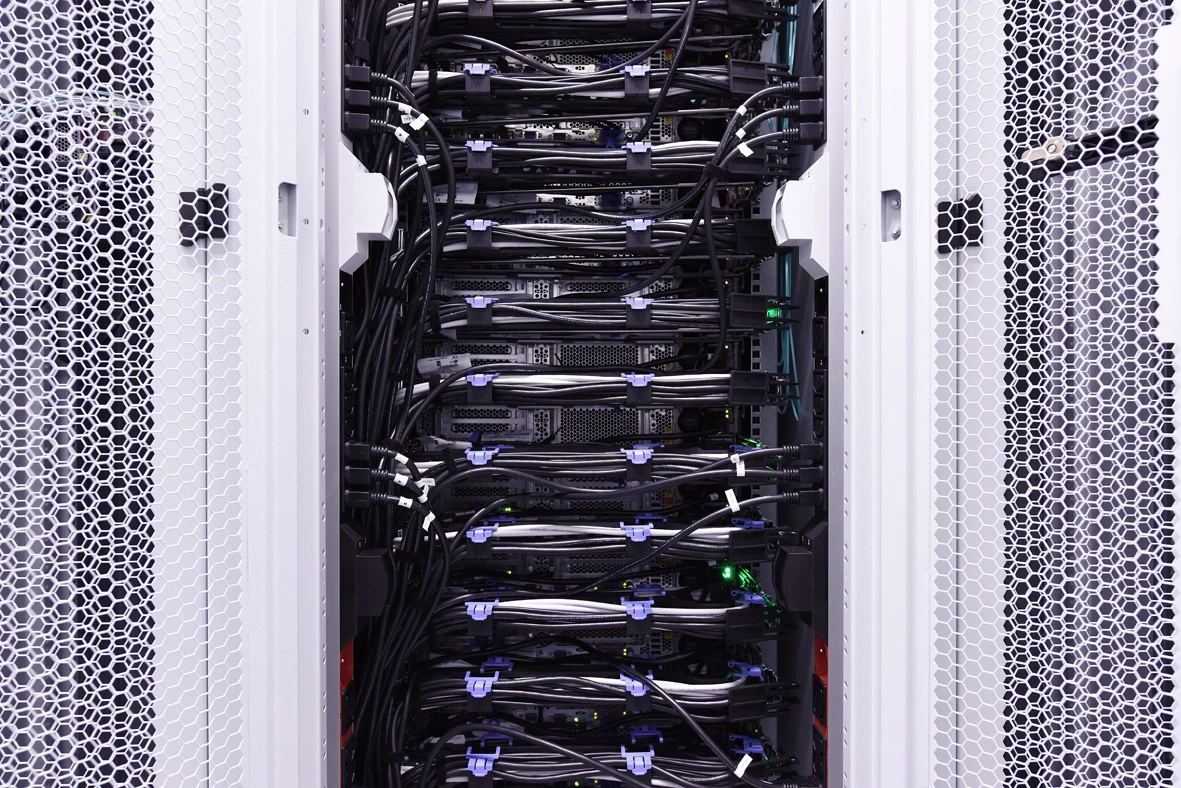
3. Physical security
Data center security doesn't start with a firewall or antivirus. It starts with the facility itself, access rules and physical movement control.
When making a selection, it is important to consider controlled access to the premises, the CCTV system, records of access and interventions, the separation of individual zones, and the established operational and security procedures. Physical security must form part of the basic standard in a data centre, regardless of the systems housed there.
4. Power, cooling and redundancy
Reliable operation of IT infrastructure relies on stable power supply and adequate cooling. The data centre must be prepared not only for normal operation, but also for outages, failures or increased load.
Of particular importance are redundant power supply circuits – that is, separate and mutually independent power supply routes – an Uninterruptible Power Supply (UPS) as a backup source for immediate switchover in the event of a power cut, backup power sources for longer outages, an effective cooling system and continuous environmental monitoring. It is precisely these parameters that have a direct impact on how stably applications and services will run in day-to-day operations.
5. Service Level Agreement and operational support
A Service Level Agreement (SLA) sets out the guarantees offered by a data centre: what the guaranteed availability is, how incidents are handled, and what happens in the event of an outage. A general claim of high availability is not enough. What matters is what is included in the service and how incidents are resolved in practice.
It is worth checking for guaranteed service availability, the availability of technical support, clearly defined incident response procedures and comprehensible contractual terms. When a problem arises, it is specific procedures and contractual obligations that matter, not general claims made in the proposal.
6. Future scalability
The data centre should not only meet current needs, but also future growth. The company can gradually increase the number of racks, performance and connectivity requirements. If the environment is not ready for this, the infrastructure will start to hold the company back.
When making a decision, it is therefore worth considering the potential for capacity expansion, the flexibility of the operating model and the scope for long-term growth. It is precisely on the basis of these criteria that specific providers can be assessed. Let’s take a look at how they fare in practice.
How SafeDX meets the requirements of a modern data centre
The SafeDX data centre in Vysočany, Prague It has been operating on the market for ten years and has focused on rack housing for corporate clients from the outset. The SafeDX Server Hotel concept is also based on this principle: a data centre is not merely a technical facility, but an operationally managed service for corporate IT. In addition to the technology itself, established processes, clearly defined responsibilities and the ability to maintain stable operations over the long term all play a key role.
For businesses that need to deploy entire rack-mounted systems in a professional environment, it is essential that the service operates predictably and without compromise in key areas. Smaller configurations, such as third-rack or half-rack units, are available for companies that need to house individual servers.
Location and facilities
The SafeDX data centre is located in Prague 9 – Vysočany. The total area of the site is over 14,000 m², of which four independent data halls, with a combined area of 520 m², offer capacity for more than 200 racks. The infrastructure is designed with an emphasis on high availability, redundancy and concurrent maintainability.
Connectivity
Five independent telecoms operators – CETIN, ČD Telematika, T-Mobile, Vodafone and Quantcom – terminate their fibre-optic cables directly in the data centre’s Meet-Me Room. SafeDX can offer shared connectivity, dedicated capacity or a direct connection to the operators present, depending on operational requirements. The service includes ConnectivityDX It may also be Distributed Denial of Service (DDoS) connectivity protection.
Physical security
The security perimeter of the site includes fencing fitted with infrared detection. Access to the data centres is controlled via a combination of a PIN code and biometric readers. The premises are monitored by a CCTV system both inside and outside the building and are physically guarded by a professional security agency on a 24/7 basis. Every entry and intervention is logged.
Power and cooling
The SafeDX Server Hotel is designed so that scheduled maintenance on power feeds does not require any downtime. Multiple independent power feeds from various sources, backup UPS units and diesel generators form part of the basic architecture. The total reserved power capacity is 3.2 MW. Power consumption per rack reaches up to 15 kW, including environments for computationally intensive applications. Cooling is provided with N+1 redundancy and separate cold aisles for efficient heat dissipation.
Service Level Agreement and Operational Support
The Service Level Agreement (SLA) guarantees data centre service availability at a level of 99.99 %. A team of experts with many years’ operational experience provides 24/7 operation, monitoring and technical support. The terms of service are set out in the contract, with a clear structure of responsibilities and an escalation process.
Scalability
In SafeDX Server Hotel, you can reserve seats for other seagulls in advance. The infrastructure is sized to grow with the client's requirements, without the need to move to a different environment.
What to look for to make the decision last
When choosing a data centre, it is worth focusing on areas that companies often overlook when making their initial decision: assess connectivity and redundancy just as carefully as price; examine the specific SLA terms; verify the level of physical security on site; take future infrastructure growth into account; and find out how the service actually performs in day-to-day operations.
It makes sense to choose a data centre based on how it will work in real operation, not just on the parameters on offer.
How to know if a data centre is the right choice
A good data centre can be identified by a combination of security, connectivity, stability of operation, transparent conditions and the ability to cover the needs of the company in the long term. It is these areas that determine whether rackhousing is a truly reliable part of corporate IT.
If a company is looking for an environment to house its own IT infrastructure, it pays to focus on a partner that has these parameters built in as the foundation of the service, not as an add-on.
Conclusion
When choosing a data centre, it is worth considering the location, connectivity, physical security, power redundancy, Service Level Agreement (SLA) and scope for future growth. Only by combining these factors can you determine whether the solution will meet the company’s requirements in the long term.
At SafeDX Server Hotel, we base our rack housing service on precisely these principles: as an operationally managed service with specific commitments that you can verify. This provides businesses with a stable and secure environment in which to run their own technology.
Interested in rackhousing at SafeDX Server Hotel?
Would you like to see what rack housing at the SafeDX Server Hotel looks like in practice? Start with an overview DataCenterDX, which describes the service’s operational framework.
For specific locations of our own technologies, please go to RackHousingDX. If you’d like to check which model is suitable straight away, please use the contact form on the service’s landing page.
FAQ
What are the most important parameters when choosing a data centre?
The most important factors are location, connectivity, physical security, power supply and cooling, the Service Level Agreement (SLA) and the potential for further infrastructure expansion.
Why isn't it enough to choose a data center based on price alone?
Price alone says nothing about the quality of connectivity, level of security, operational support or redundancy. These factors have a direct impact on operational stability and long-term costs.
Who is rackhousing suitable for?
Rackhousing is suitable for companies that wish to operate their own IT infrastructure in a professional, secure and stable environment: outside their own premises, but under their own control. For smaller set-ups, individual servers can also be housed in third-rack or half-rack units.
What to look out for when choosing a data centre?
Most often, companies underestimate the importance of connectivity, the specific terms of the Service Level Agreement (SLA), physical security and the environment’s readiness for future growth.
What is rackhousing?
Rackhousing involves housing a company’s own IT infrastructure – that is, servers, network equipment, storage systems and other devices – in a professional data centre. The company retains control over its hardware but utilises the data centre’s facilities: power supply, cooling, connectivity, physical security and operational monitoring.